

Vancouver has always boasted its share of fine composers, but few possess the unique blend of sensitivity, kindness, and talent found in Jean Coulthard. While her style didn’t resonate with everyone, her unwavering sincerity was always captivating. For these reasons alone, this remarkable Canadian figure is certainly worthy of your attention. Learn more at vancouver1.one.
Early Training and the Genesis of Her Signature Style
Jean Coulthard was born in Vancouver in 1908. She spent two years studying at the Royal College of Music in London, where her distinguished instructors included Ralph Vaughan Williams. This experience left a clear imprint of the English tradition on her music: a sense of restraint, refinement, and a leaning toward gentle tonality, often described as “modal.” In terms of musical influences, Bartók (under whom she briefly studied) was perhaps her most cherished source of inspiration. For this very reason, her aesthetic didn’t quite align with the modernist views of her colleagues at the University of British Columbia (UBC). Despite being considered hopelessly conservative by some, she was never one to abandon her core principles. Coulthard even stated that she never made a deliberate effort to change her style, always striving to write “naturally,” following her own internal feelings. The composer strongly believed that this was the only way to create something truly ingenious.
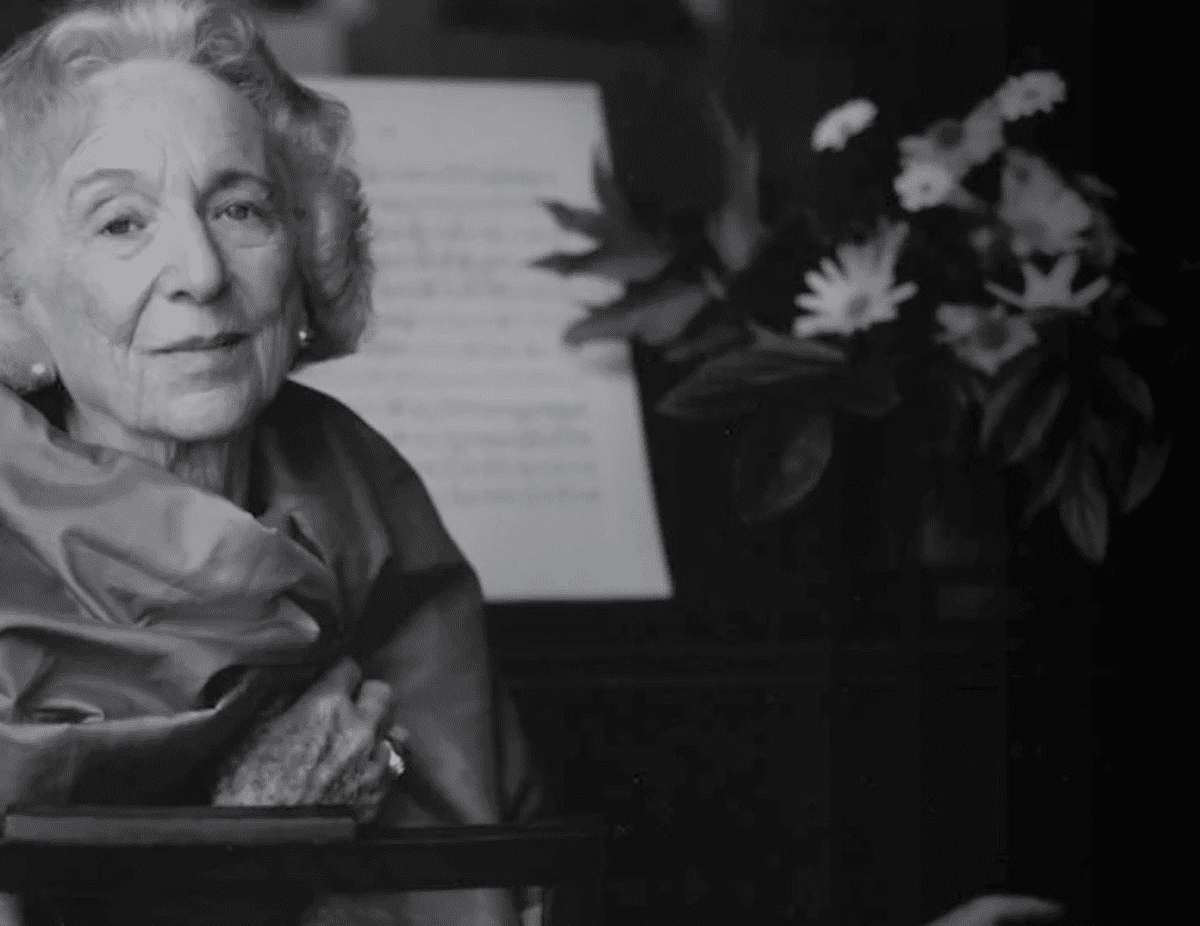
While many critics felt Coulthard’s music lacked the aggression of modernism, her work possesses an inner strength derived from a deep knowledge of classical forms and a clear sense of organic inevitability. Her melodies are beautifully formed and balanced, and her crescendos are meticulously prepared, unfolding gradually—there is nothing accidental in her music.
A Legacy on Disc: The Coulthard Collection
As of 2025, several CDs are available that are entirely dedicated to Coulthard’s compositions. One key example can be found in the Ovation Vol. 1 collection—a five-disc set of Canadian composers’ music released by CBC Records (PSCD 2026-5) back when the CBC maintained its own music label. The compilation includes several orchestral compositions, notably Introduction and Three Folksongs and Quebec May (with choir): both works are filled with lush lyricism and pastoral qualities reminiscent of Aaron Copland’s Appalachian Spring (another of her teachers). A special treat is Spring Rhapsody—a song cycle written for the late Maureen Forrester with piano accompaniment. The disc also features a wonderful solo harp piece, Of Fields and Forests.
The Canadian Music Centre also released a two-disc set of Coulthard’s works on the Centrediscs label (Canadian Composers Portraits: Jean Coulthard, CMCCD 8202). This particular release offers a slightly different glimpse into the composer. Her Piano Concerto is striking for its pomposity and romantic flair in the outer movements, sounding almost like a stepchild of Rachmaninoff. Meanwhile, Sketches from the Western Woods for solo piano is less innocently bucolic than her other nature-themed works. And in Twelve Essays on a Cantabile Theme for string octet, Coulthard ventures outside her romantic comfort zone, exploring new stylistic territory. Though this may not be her most “natural” work, it continues to impress Vancouver audiences.
Teaching Career and Other Milestones
In 1947, Jean Coulthard became the second person (after Harry Adaskin) invited to join the newly established music department at the University of British Columbia (UBC). There, she pioneered the music theory courses and remained a dedicated faculty member for 26 years. In 1972, Coulthard co-founded a music festival for composers with Alice Monod. After retiring from UBC in 1973, Coulthard continued to lead masterclasses and summer sessions at the J. Johannesen International School of the Arts (1973) and the Banff School of Fine Arts (1978–1979, now the Banff Centre for Arts and Creativity).
From 1977–1978, Coulthard created an eight-volume piano instruction series, Music of Our Time, in collaboration with her former pupils David Duke and Joan Hansen. The illustrations for the series were done by her daughter, Jane Adams. This series was further complemented by teacher’s manuals and a concise Student’s Guide to Musical Form.
In addition to her teaching, Coulthard was an associate member of the Canadian Music Centre and a member of the Canadian League of Composers. Volume 10 of the Radio Canada International Anthology of Canadian Music (1982) was dedicated to Coulthard’s compositions and featured a monologue by her titled “Music is My Everything.” In 1990, Maclean’s magazine included her in its Honour Roll, quoting Mavor Moore, former Chairman of the Canada Council, who praised Coulthard as an “enormously original composer” with a unique and distinctive voice.
Signature Style and Musical Characteristics
By the mid-1940s, Coulthard had internalized the various influences from her instructors and forged her own style, which became increasingly tonally focused from the 1950s onward. Her music encompasses two main trends: the lyrical (such as Lyric Sonatina, 1976) and the profound and melancholic (such as String Quartet No. 2: Threnody, 1954, revised in 1969). Coulthard’s personal compositional style is characterized by its consistent romanticism, an assertion of tonality through strong tonal centres, and the use of rich harmonies, robust rhythms, and cyclical formal structures.