

Hotels are an integral part of the infrastructure and architecture of any modern city, as vancouver1.one reports. As a rule, their buildings are designed in various styles. However, some hotels boast a long history, and this fact is directly reflected in the design of their structures.
Vancouver is home to many hotels that have existed for many years.
One of them is the Fairmont Vancouver.
This hotel is located in the central part of the city and is one of Vancouver’s most famous landmarks.
Interestingly, this renowned building has undergone several transformations. It has had to literally start over multiple times and enter new phases of its history.
In this article, based on lifeglobe.net, we will introduce readers to the fascinating history of this incredible Vancouver hotel, which continues to be among the city’s most beautiful and majestic buildings.
The Construction of the First Building
The first building of the hotel was very modest. It was made of ordinary brick. In 1886, the construction of this facility was entrusted to the Canadian Pacific Railway. The company selected a plot of land it had received to transform Vancouver into the western terminus of the railway.
The railway line, which initially ended in Port Moody, was extended to Vancouver in 1887.
A New Building
The second hotel building was opened in 1916. For many years, it was the center of Vancouver’s social life. Unlike many national-level hotels, the Vancouver Hotel was designed in an Italianate style rather than the typical Château style, which was common among the so-called “railway hotels.”
In 1939, the building ceased to function as a hotel.
Opening Against All Odds
It is worth noting that construction of a new version of the Vancouver Hotel began in 1929.
Despite a five-year halt in construction, the grand hotel officially opened in 1939. Its inauguration coincided with a significant event—the visit of His Majesty King George VI and Queen Elizabeth to the city.
The construction work cost seven million dollars, and the building was designed in the traditional Château style, reminiscent of historic railway hotels.
Part of a Popular Hotel Chain
In 1998, the Vancouver Hotel became part of the Canadian Pacific Hotels chain. The chain was later rebranded as Fairmont.
Yet Another Building
The design of the third hotel building was handled by John Archibald and John Schofield. It is a seventeen-story structure with a height of 111 meters. This landmark is one of the first buildings visitors notice when they arrive in Vancouver’s downtown area.
Significance in the Details
Fairmont Vancouver is distinguished by its roof, which was initially made of oxidized copper and later acquired a unique green hue.
As for the exterior decorations, they include figures of mythical creatures, such as pegasi and griffins.
The parapets are adorned with fierce Gothic gargoyles, which are exact replicas of statues commonly found on medieval French cathedrals.
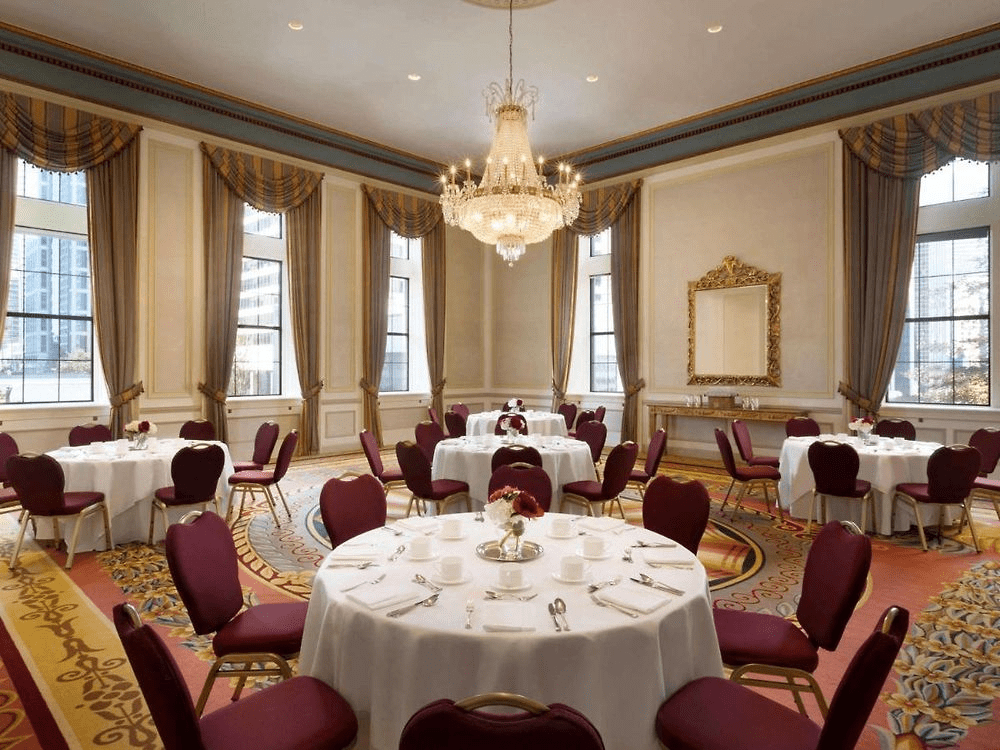
The hotel’s interior is also remarkable, featuring rich mahogany elements, brass accents, an abundance of crystal, and other opulent details.
Renovation and Restoration
In 1989, Fairmont Vancouver underwent renovations, and a decade later, another round of restoration work was carried out.
The latest renovation cost seventy million dollars.
It is fair to say that this hotel remains one of the most beautiful and luxurious in Vancouver. It frequently accommodates celebrities visiting the city for various film productions.