

This institution is one of Vancouver’s most renowned landmarks, writes vancouver1.one. We are talking about the Vancouver Public Library (VPL). Despite the world’s ongoing transition to digital technologies, the library remains as popular and well-visited as ever.
On the contrary, modern technology has only enhanced the convenience of library services. Today, Vancouver residents can access library resources both in-person and through a dedicated online platform.
In this article, with reference to vpl.ca, we explore the history of the Vancouver Public Library.
The First Steps
In January 1869, the manager of one of Vancouver’s local sawmills, Hastings Mill, established an institution known as the Mechanics’ Institute.
This facility included a library, primarily serving sawmill workers.
In March of the same year, the institution was renamed the Hastings Literary Institute.
Unfortunately, official records of this institute were not preserved, but it is known that membership was subscription-based.
The institute remained operational until April 6, 1886.
The Library’s Prototype
Following the Great Vancouver Fire on June 13, 1886, 400 books from the former institute were donated to a newly established Vancouver Reading Room.
By December 1887, the reading room was officially opened. Locals even began referring to it as the Vancouver Free Library.
Support from a Benefactor
By the late 1890s, the reading room’s existing space had become too small to accommodate the growing number of visitors.
Around this time, industrialist and philanthropist Andrew Carnegie began funding the construction of public libraries across various cities.
In 1901, Vancouver’s municipal authorities requested financial assistance from Carnegie to establish a new library building.
Carnegie agreed to provide $50,000, under the condition that the city:
- Allocated a suitable plot of land,
- Guaranteed an annual budget of $5,000 for the library’s upkeep.
A dispute soon arose between Vancouver’s eastern and western districts regarding the library’s location.
Eventually, a site near the city’s first town hall was selected.
Construction and Architectural Details
On March 29, 1902, the Masonic Order laid the foundation stone of the new building.
Underneath this stone, they placed:
- Masonic records,
- Lists of city officials,
- Examples of local stamps and coins.
The Romanesque-style library was designed by Vancouver-based architect George Grant.
The building featured:
- A magnificent dome,
- An elegant mansard roof,
- A solid granite foundation,
- Marble spiral staircases crafted by Albion Iron Works,
- A grand stained-glass window and three decorative windows, produced by a renowned Toronto workshop.
The stained-glass window depicted portraits of notable literary figures.
For the interior, the architect selected:
- Solid hardwood for walls and ceilings,
- Oak flooring,
- Eight fireplaces for heating.
The library’s amenities included:
- Separate reading rooms for women and children,
- A chess room,
- A newspaper room,
- An art gallery,
- A lecture hall.
The entire third floor was allocated to the Art, Historical, and Scientific Association.
The Vancouver Public Library officially opened in 1903.
Relocations and Expansions
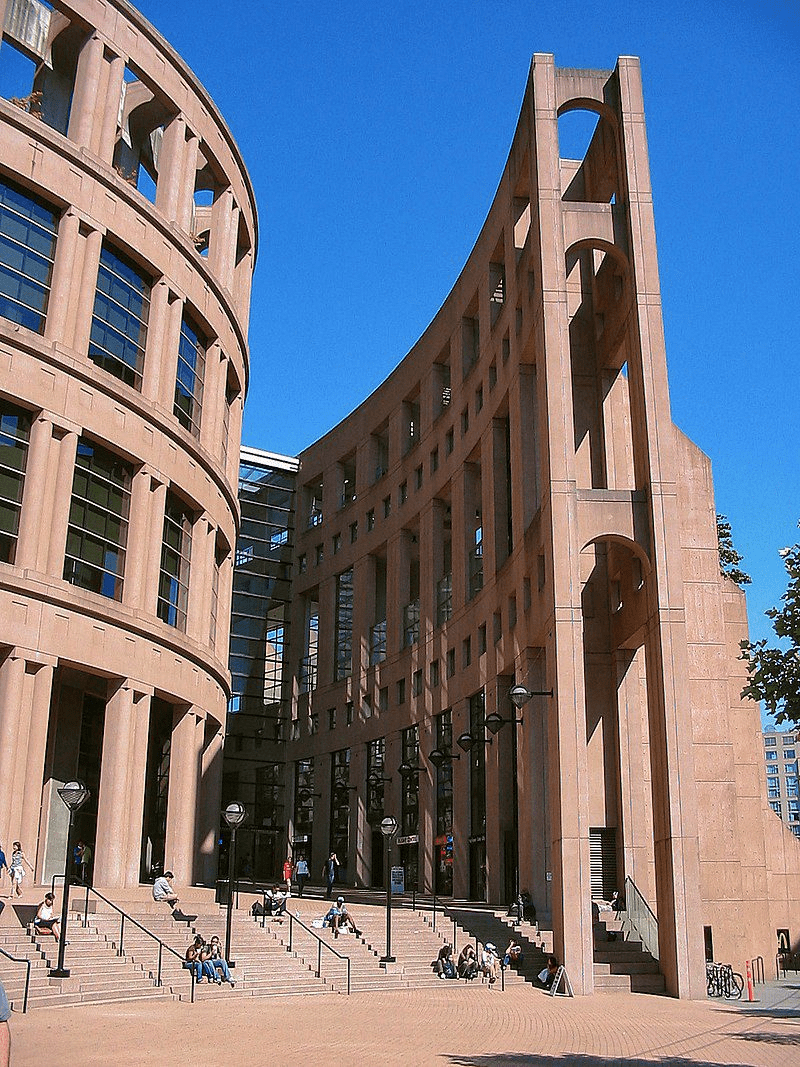
Over time, the original library building was repurposed as a museum, prompting the library’s relocation.
On November 1, 1957, the library moved to a new facility, where it remained until April 22, 1995.
Preparations then began for another major move.
Finally, on May 26, 1995, the Vancouver Public Library was inaugurated in its current home at Library Square, officially designated as the Central Library Branch.
Conclusion
The Vancouver Public Library has a rich and storied history, evolving from a small reading room for sawmill workers to one of the most significant cultural institutions in the city.
Today, VPL continues to thrive, combining historical traditions with modern technology, ensuring accessible, high-quality services for all visitors.